

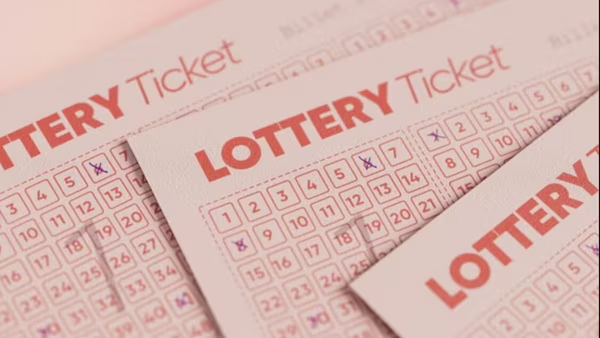
The lottery has been a part of human culture for centuries, evolving from ancient drawings of lots to modern multi-million-dollar jackpots. For many people, playing the lottery is not just about the possibility of winning big but also about the thrill of participation, the anticipation of the draw, and the dream of financial freedom. In this article, we will dive deep into the history, types, regulations, psychology, and strategies surrounding lotteries, while also examining their cultural and social significance.
The Origins of Lottery Games
Lotteries trace back to some of the earliest civilizations. Ancient records from China during the Han Dynasty mention drawings of lots that funded public projects, including the Great Wall. In Europe, lotteries gained traction during the Roman Empire. Citizens purchased tickets for a chance to win valuable items, and funds often supported state initiatives such as infrastructure and festivals.
By the 15th and 16th centuries, organized lotteries became more structured in Europe, particularly in the Netherlands and England. These lotteries funded town fortifications, charitable causes, and exploration ventures. The concept eventually spread worldwide, shaping the lottery as we know it today.
The Rise of Lottery in the Modern Era
In the United States, lotteries played an essential role in building colonies. For instance, early lotteries helped finance Harvard and Yale Universities. Over time, however, skepticism about fairness and corruption led to temporary bans. In the 20th century, government-regulated lotteries made a comeback, positioning themselves as transparent systems designed to generate revenue for education, healthcare, and community programs.
Today, the lottery industry is a multibillion-dollar sector with participants spanning across continents. National and state-run lotteries, along with private operators, continue to attract millions of players who chase the promise of transformative winnings.
Types of Lottery Games
The lottery is not a single game but an umbrella term covering many variations. Understanding these types helps players make informed choices.
Traditional Draw Games
Players select numbers and await scheduled drawings. Popular examples include daily or weekly number draws where winners are chosen randomly by machines.
Scratch-Off Tickets
These are instant-win tickets. Players scratch off a concealed surface to reveal whether they have won a prize. They are popular for their immediacy and affordability.
Raffles
Unlike number-based lotteries, raffles provide a fixed number of tickets. Each ticket corresponds to a specific draw entry, guaranteeing that someone will win.
Multi-State Jackpots
Games pooling resources across multiple states or countries create larger prize pools. This increases jackpot sizes and public excitement, making them some of the most widely recognized lotteries.
Digital Lotteries
With the growth of online platforms, many jurisdictions now allow lottery purchases through websites or apps, providing convenience for modern players.
How Lotteries Generate Revenue
The primary role of modern lotteries is to raise funds for public purposes. A portion of ticket sales goes into the prize pool, while the remainder is allocated to government initiatives, retailer commissions, and administrative costs. Revenue often supports:
-
Public education systems
-
Healthcare services
-
Infrastructure improvements
-
Veteran support programs
-
Community grants
This model makes the lottery both a game of chance and a tool for social funding.
The Psychology of Lottery Players
Why do people buy lottery tickets despite the extremely low odds of winning? Psychologists point to several factors:
-
Hope and Optimism: The lottery gives players a chance to imagine life-changing possibilities.
-
Small Investment, Big Dream: For a modest ticket price, players can dream of immense rewards.
-
Social Influence: When jackpots reach record highs, peer discussions and media coverage amplify participation.
-
Near-Miss Effect: Coming close to winning can motivate players to keep trying, even when logic suggests stopping.
Strategies for Playing the Lottery
While the lottery is a game of pure chance, players often adopt strategies to increase their perceived odds.
Common Number Selection
Many players use birthdays, anniversaries, or lucky numbers. While this personalizes the experience, it also means prizes may be shared if multiple winners select the same numbers.
Random Number Generators
Some prefer quick-pick tickets, letting machines select numbers randomly. Interestingly, quick picks often represent a majority of jackpot wins due to their unpredictability.
Pooling Resources
Lottery pools allow groups of people to contribute collectively to purchase more tickets, increasing their overall chances while sharing winnings.
Consistency
Some players believe that sticking with the same numbers over time improves odds, though statistically each draw remains independent.
Cultural Significance of Lotteries
Lotteries have become more than games; they are cultural events. Record jackpots dominate news headlines, creating excitement across communities. In some places, buying a ticket during festive seasons is a tradition. Lotteries also inspire entertainment, films, and even literature, reflecting society’s fascination with chance and destiny.
Legal and Ethical Considerations
Governments regulate lotteries strictly to ensure fairness and transparency. Ethical debates surround their role in encouraging gambling behavior, especially among vulnerable groups. To address this, many lotteries incorporate responsible gaming initiatives, such as spending limits and awareness campaigns.
Economic Impact of Lotteries
Lotteries not only generate government revenue but also influence economies by creating jobs, supporting retailers, and driving tourism. Large jackpots attract participants from across borders, expanding their economic footprint.
The Future of Lottery Games
As technology evolves, lotteries are adapting with:
-
Blockchain-based draws for transparency
-
Mobile-first ticketing systems for convenience
-
Augmented reality scratch-offs for engagement
-
Global collaborative jackpots for larger prize pools
These innovations promise to keep the lottery relevant in a digital-first era.
FAQs About Lottery
How do lotteries determine winning numbers?
Lotteries typically use certified machines and balls, or digital random number generators, to ensure fairness and prevent manipulation.
Can foreign players participate in national lotteries?
Many countries restrict participation to residents, but some international platforms legally allow foreign players to enter select lotteries.
What happens if a winning ticket is lost?
Regulations vary, but generally, a lost ticket cannot be replaced. Some jurisdictions encourage signing tickets immediately after purchase to protect ownership.
Do lottery winnings get taxed?
Yes, most governments tax lottery winnings, sometimes at both federal and state levels. Tax rates depend on the jurisdiction.
Is playing the lottery a good financial strategy?
The lottery should never replace sound financial planning. It is entertainment, not an investment, given the extremely low odds of winning.
What is the largest lottery jackpot ever won?
Jackpot sizes continue to grow, with some exceeding billions of dollars. Record-breaking jackpots attract unprecedented attention worldwide.
