

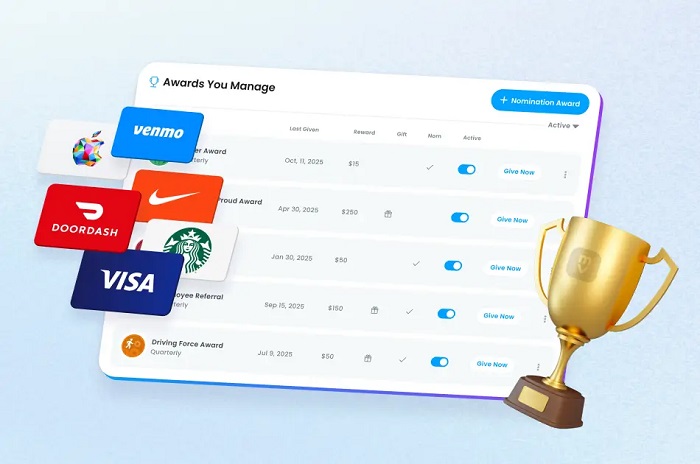
In modern digital commerce, timing often matters just as much as value. Whether an enterprise operates a customer loyalty platform, an e-commerce cashback campaign, an employee recognition initiative, or a digital entertainment platform, the promise of a reward is only as powerful as the speed and accuracy with which it arrives. For years, businesses treated incentive management as an administrative afterthought, relying on manual reconciliations, sprawling spreadsheets, and periodic batch processing. A participant hit a qualifying milestone, waited days or weeks for internal approval, and hoped the credit arrived without an accounting error.
Today, that delayed model represents an active liability. Consumers and participants expect immediate validation, while operational teams cannot afford the labor hours required to manually verify qualifying transactions. Automated reward systems have stepped in to bridge this divide. By replacing human bottlenecks with programmatic rule engines, these platforms have turned bonus distribution from a clunky operational headache into a continuous, real-time engagement engine.
The Operational Drag of Legacy Workflows
To appreciate why automation has become indispensable, it helps to examine the hidden friction inherent in manual bonus management. When operational teams attempt to administer promotional campaigns by hand, the risk of human error compounds with every new participant. Finance staff must cross-reference transactional logs against promotional criteria, marketing managers must confirm qualifying actions, and customer support staff are left issuing manual balance adjustments when systems fail to communicate.
This fragmented workflow introduces three significant vulnerabilities:
-
Costly clerical errors: Overpaying bonuses erodes campaign margins, while underpaying or missing a customer entirely damages brand credibility.
-
Protracted payout latency: A significant delay between earning an incentive and receiving it weakens the psychological link between the user’s action and positive reinforcement.
-
Inflated customer service volume: The single most common inquiry during major promotional pushes is a straightforward question: where is my reward? When human validation is required, support queues back up, driving up staffing costs and leaving customers frustrated.
Manual methods also fail the basic test of scalability. A promotional campaign that functions passably for five hundred accounts collapses when faced with fifty thousand concurrent participants. Without automation, expanding a promotional initiative requires an unsustainable increase in administrative headcount.
Real-Time Execution Through Event-Driven Architecture
The core breakthrough of modern reward engines lies in event-driven architecture. Instead of reviewing completed actions at the end of a week or billing cycle, automated platforms listen continuously for discrete user behaviors across an organization’s tech stack.
When a customer triggers a predefined milestone—such as completing an onboarding checklist, hitting a spend threshold, or renewing an annual contract—an API call immediately notifies the reward engine. The system instantly evaluates the transaction against program parameters, calculates the exact reward value, and credits the recipient’s digital wallet, points balance, or account ledger within fractions of a second.
This instantaneous delivery fundamentally changes user behavior. Immediate reinforcement creates a direct feedback loop that encourages immediate re-engagement. If a user receives a credit seconds after completing an action, they are far more likely to continue browsing, explore additional services, or initiate another transaction during that same session. The bonus transforms from a delayed rebate into an active driver of session retention.
Algorithmic Verification and Fraud Mitigation
Whenever financial value is distributed online, opportunistic actors inevitably attempt to exploit systemic loopholes. Promotional abuse—ranging from multi-account creation and bot-driven referral schemes to rapid cash-out attempts—can decimate marketing budgets if left unchecked.
Manual reviews are uniquely ill-suited to combat modern promotional abuse. Fraud rings easily overwhelm human reviewers by distributing subtle, low-value anomalies across thousands of synthetic identities that look legitimate in isolation.
Automated distribution systems integrate algorithmic compliance and risk scoring directly into the payout pipeline:
-
Velocity and behavioral checks: The system monitors transaction speeds, device fingerprints, and shared IP clusters, instantly pausing distributions to suspicious accounts before value leaves the platform.
-
Automated qualification gating: Instead of releasing credits unconditionally, automated logic holds bonuses in a pending state until secondary conditions are met, such as account age thresholds, verified payment methods, or minimum activity levels.
-
Programmatic clawbacks: If a transaction that triggered a bonus is subsequently refunded, disputed, or charged back, automated ledgers immediately freeze or reverse the associated promotional credit without requiring human intervention.
By embedding risk parameters directly into the disbursement engine, businesses safeguard their margins without introducing unnecessary friction for legitimate, high-value users.
Precision Personalization at Enterprise Scale
Traditional bonus campaigns were notoriously blunt instruments. Because administering varied promotional tiers manually was an administrative nightmare, marketing teams defaulted to flat, blanket incentives: every user received the exact same discount code or the same nominal rebate.
Automated systems make granular personalization straightforward. By interfacing directly with customer relationship management (CRM) software and internal data warehouses, modern reward tools can dynamically calibrate bonus structures to match individual user segments.
High-value customers can automatically receive elevated tiers or customized perks, while lapsed accounts receive precisely calibrated reactivation incentives designed to maximize return on investment. The engine can also enforce dynamic expiration windows, tailoring urgency to an individual’s historical usage habits. This capability ensures that promotional capital is deployed where it generates the highest incremental return, rather than being sprayed indiscriminately across audiences that require no incentive to convert.
Reclaiming Strategic Bandwidth for Growth
Perhaps the most significant advantage of automated reward distribution is the liberation of internal resources. When promotional disbursement runs autonomously, operations, finance, and support teams step out of the mechanical loop.
Finance departments no longer spend days reconciling promotional ledgers against bank transfers or digital ledgers. Marketing managers can launch complex, multi-tiered incentives without worrying whether back-office staff can handle the administrative burden. Customer support teams experience a marked drop in repetitive ticketing, allowing them to focus on resolving complex client problems and improving overall service quality.
In an increasingly competitive landscape, operational agility is a defining advantage. Automated bonus distribution transforms an error-prone cost center into a dependable, high-precision growth engine. By pairing instantaneous delivery with programmatic security and intelligent personalization, businesses not only protect their bottom line but also deliver the kind of seamless, rewarding experiences that turn casual participants into loyal brand advocates.
