

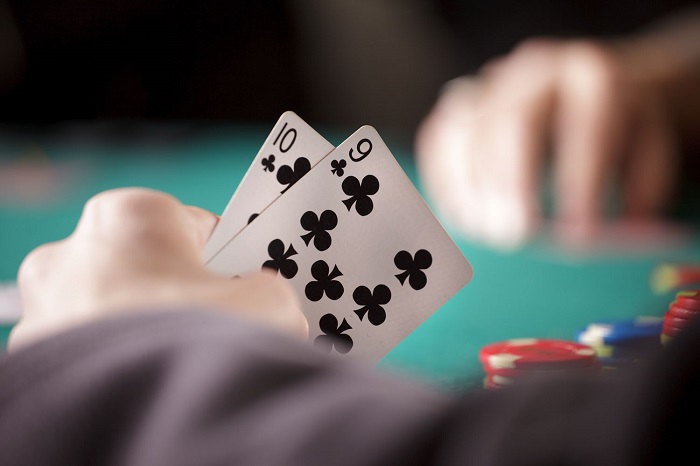
Most people view poker through the cinematic lens of dramatic bluffs, dark sunglasses, and mountains of chips pushed across green felt. Beneath that pop-culture veneer, however, the game functions as one of the world’s most rigorous laboratories for applied human psychology and decision science. Unlike chess, where both participants can inspect every piece on the board with total clarity, poker is played in the fog of incomplete information. You cannot see your opponent’s holdings, the clock is constantly ticking, and real financial capital hangs on every choice.
In high-pressure situations—whether executing a corporate acquisition, navigating market volatility, or managing a sudden operational crisis—people routinely fall prey to analysis paralysis or emotional overreaction. Serious poker players encounter these exact stress vectors hundreds of times in an evening. Over time, mastering strategic poker principles systematically reconditions the brain, providing a mental framework that transforms chaotic uncertainty into structured, objective decision-making.
Probabilistic Thinking in a World of Hidden Information
Human beings possess an instinctual craving for certainty. When faced with ambiguous circumstances, untrained decision-makers often delay action while hunting for complete data, or they swing to the opposite extreme and rely on gut speculation.
Elite poker strategy replaces the pursuit of absolute certainty with probabilistic thinking. A competent player never asks, “What specific cards does my opponent have?” Answering that with precision is mathematically impossible. Instead, they think in ranges—constructing a spectrum of possible hands an opponent could logically hold based on their position, prior actions, and established tendencies.
By categorizing scenarios into distributions of likelihood rather than black-and-white outcomes, players normalize operating without all the facts. Under intense pressure, this mental discipline prevents panic. Rather than freezing because critical information is hidden, the strategically trained mind assesses what percentage of the time a particular action will succeed, weighs the cost of failure against the payoff, and executes without hesitation.
Overcoming the Cognitive Trap of Resulting
One of the most destructive habits in high-stakes environments is outcome bias, commonly known in gaming circles as resulting. When an initiative produces an immediate win, people naturally credit their own ingenuity; when an initiative fails, they assume the underlying strategy was flawed.
In reality, high-risk environments often yield negative outcomes despite flawless execution, just as reckless gambles can temporarily pay off through sheer luck. A poker player can commit their chips holding an eighty percent mathematical advantage, only to watch an opponent catch a lucky card on the final street.
To remain rational across thousands of hands, players must forcefully separate the quality of a decision from its immediate result. They evaluate every move strictly through the framework of positive expected value (+EV)—determining whether an action would produce a net profit if repeated ten thousand times under identical conditions. Developing this disciplined detachment builds profound psychological durability. In professional environments, it empowers decision-makers to maintain composure during temporary downturns and prevents them from falling in love with reckless strategies that merely got lucky once.
The Science of Tilt and Emotional Regulation
Under acute pressure, the human body triggers a physiological stress response. Adrenaline surges, peripheral vision narrows, and the prefrontal cortex—the engine of analytical reasoning—cedes control to the limbic system. In poker, this cognitive breakdown is called tilt.
While popular culture imagines tilt as an explosive tantrum, it is far more dangerous when it is subtle. Quiet tilt surfaces as an incremental breakdown of discipline: calling a bet when logic dictates a fold, playing marginal hands out of boredom or fatigue, or stubbornness rooted in wounded pride.
Recognizing Somatic Warning Signs
Experienced players approach emotional control not as a vague virtue, but as a technical necessity. They train themselves to detect early physical markers of stress—a sudden tightening of the jaw, shallow breathing, or an accelerated pulse—before their emotions override rational analysis.
By identifying these cues, players introduce intentional cognitive pauses to reset their nervous system. This ability to spot emotional compromise in real time is invaluable in any stressful environment. When a high-stakes negotiation turns contentious or an unexpected setback threatens a project, the instinct to lash out or surrender leverage is replaced with deliberate emotional neutrality.
Positional Leverage and the Value of Optionality
In poker, the order of play rotates clockwise every hand. The player who acts last on a given betting round sits in position, an advantage so significant that it often outweighs the raw strength of the cards being played.
Acting last means observing every move your competitors make before committing a single chip of your own. You collect valuable behavioral data while your rivals must operate in the dark. As a result, players in position can control the size of the pot, extract maximum value from strong holdings, and execute lower-risk bluffs because they possess superior situational awareness.
This dynamic yields a critical strategic principle: preserve optionality whenever possible. Under severe pressure, amateurs frequently rush to make premature commitments simply to alleviate the discomfort of waiting. A seasoned strategist holds back, allowing competitors to reveal their priorities, commit resources, and expose weaknesses first. Recognizing who holds positional leverage dictates whether you should aggressively dictate terms or conserve capital and wait for a better spot.
Bankroll Discipline as an Anchor for Rationality
Even the sharpest analytical mind breaks down when the stakes exceed emotional comfort. A player wagering money designated for their mortgage or living expenses cannot make mathematically sound decisions. Fear takes over; they fold winning hands to avoid risk and pass up profitable opportunities because the prospect of loss is intolerable.
For this reason, strict bankroll management is the prerequisite for all advanced poker strategy. Professional players maintain dozens, sometimes hundreds, of buy-ins in reserve to weather the inevitable downswings of statistical variance. When a single loss poses zero threat to an individual’s solvency, the mind is free to calculate odds with total objectivity.
The broader life parallel is unmistakable. Maintaining a substantial operational margin of safety—whether in corporate cash reserves or personal finances—is not merely prudent accounting; it is psychological armor. When your baseline security is guaranteed, sudden external crises do not trigger panic-driven concessions. You can afford to think clearly, stay the course, and make the correct call when everyone else is rushing to escape the pressure.
Calmness in turbulent moments is not an accident of temperament; it is the natural byproduct of a battle-tested mental architecture. By embracing incomplete data, focusing on long-term value over short-term results, and enforcing emotional boundaries, strategic poker players turn high pressure from an overwhelming enemy into a decisive competitive advantage.
